Graas closes US$17M Series B, acquires Trustana → Read more


eCommerce teams aren’t short on data. They’re drowning in it. Customer behavior, ad performance, inventory signals, support tickets - everything streams in constantly.
Yet most teams still operate in silos, spending more time pulling reports, cleaning spreadsheets, and reconciling dashboards than actually making decisions. Even with modern BI tools, value extraction is manual.
Someone still has to ask the right question, interpret the insight, and decide what to do next. In a fast-moving market, that lag adds up.
This is where dashboard fatigue sets in. Teams bounce between Shopify, Google Ads, Klaviyo, Meta, and analytics tools just to form a partial picture. Insights arrive late. Opportunities slip by. And while AI assistants exist, they’re mostly reactive, waiting for prompts instead of driving action.
In 2026, that model breaks. Agentic infrastructure flips the workflow. Autonomous AI agents don’t just analyze data, they act on it. They optimize campaigns, test ideas, surface insights unprompted, and fix inefficiencies continuously.
Your next eCom dream team won’t just be human. It’ll be a coordinated network of AI agents working 24/7, moving faster, personalizing deeper, and scaling smarter than ever before.
Let’s dive right in and discuss how AI agents will assist your eCommerce strategy.
Today’s eCommerce teams sit at an uncomfortable intersection: unprecedented data access and shrinking time to act.
Every platform generates signals (traffic shifts, spend fluctuations, inventory pressure, customer behavior) but interpreting those signals still relies on manual checks and delayed reviews.
In 2026, eCommerce AI Agents fundamentally change this dynamic. Instead of waiting for teams to query dashboards, agents continuously synthesize real-time inputs, detect anomalies as they emerge, and recommend corrective actions before performance drifts.
This is the shift from passive analytics to active intelligence - an always-on layer that turns data into awareness by default.
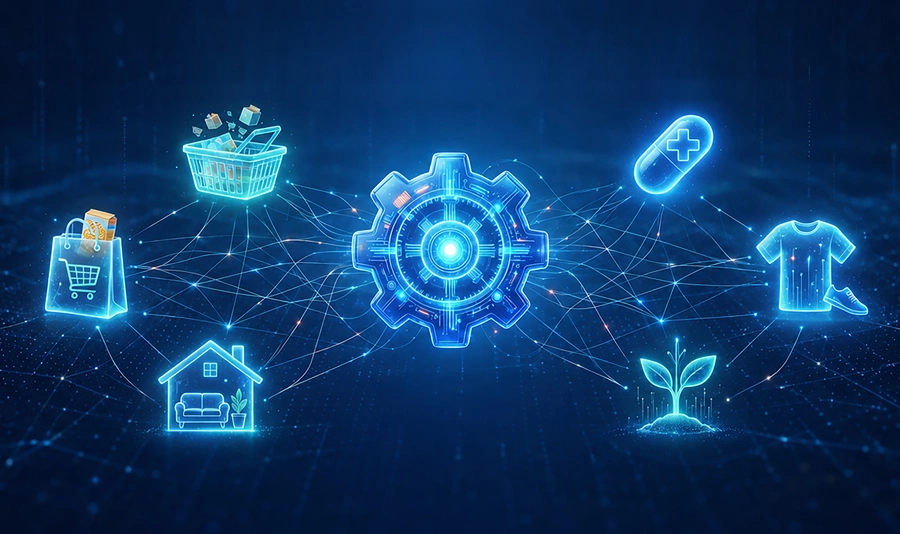
At the base of this intelligence layer sits the Data Foundation Agent. Its role is not analysis, but coherence. It connects and standardizes data across the entire commerce stack, including:
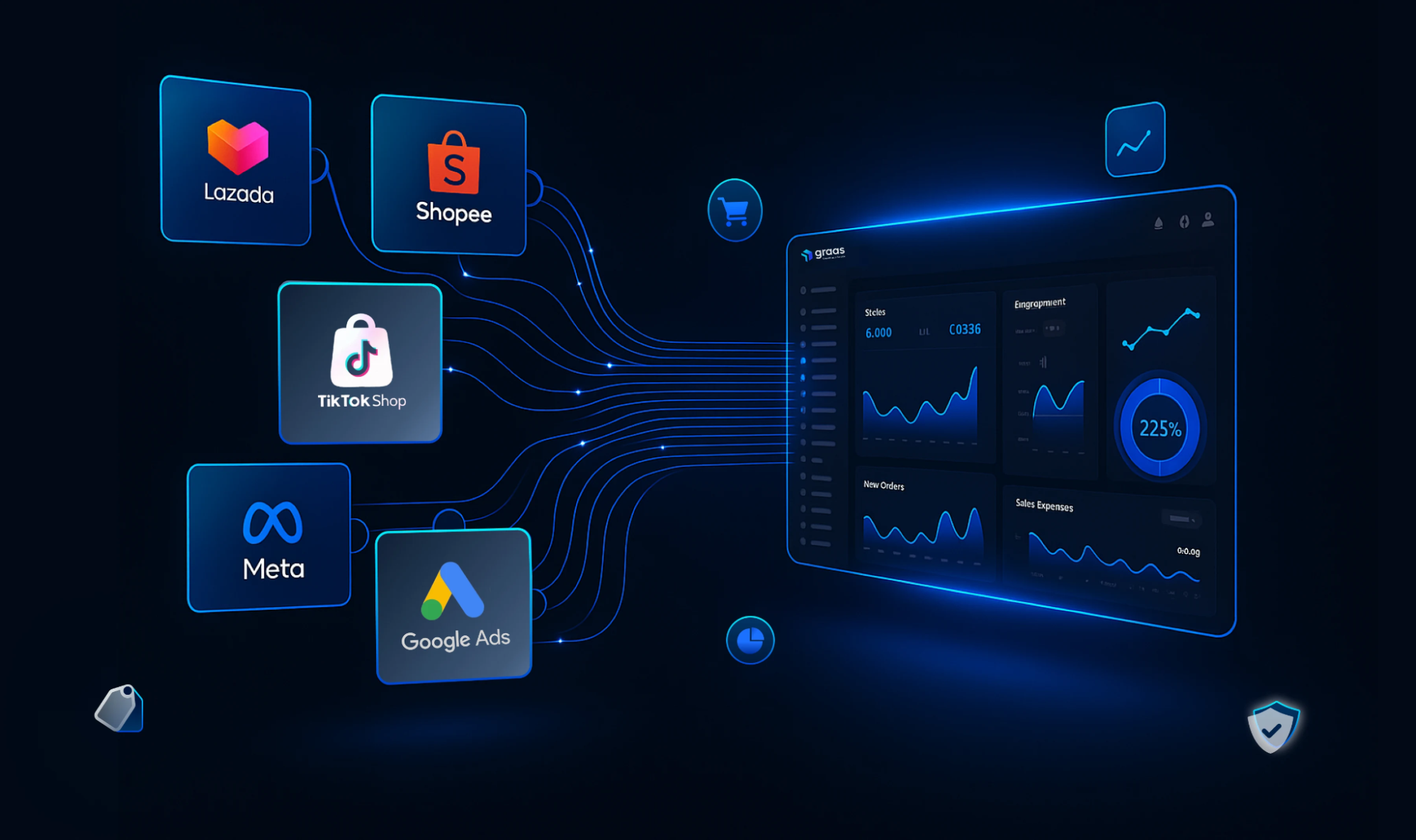
Rather than exporting reports or stitching spreadsheets, this agent continuously resolves inconsistencies like SKU naming conflicts, attribution mismatches, time-zone lags, and channel-specific metric definitions.
The result is a true single source of commerce truth.
For teams, this means no more arguing over numbers, no more manual reconciliation, and no more blind spots across channels. The agent operates as living infrastructure, constantly syncing, validating, and contextualizing data so every downstream decision is grounded in the same reality.
Once data is unified, intelligence becomes the differentiator. The Growth Analyst Agent functions as an always-on strategic analyst, capable of understanding relationships between metrics.
Instead of static dashboards, teams can interact through natural language. Ask why TikTok ROAS dipped while Meta stayed stable, and the agent traces causality across spend patterns, audience saturation, creative fatigue, and engagement signals. Within seconds, it delivers a clear, contextual explanation.
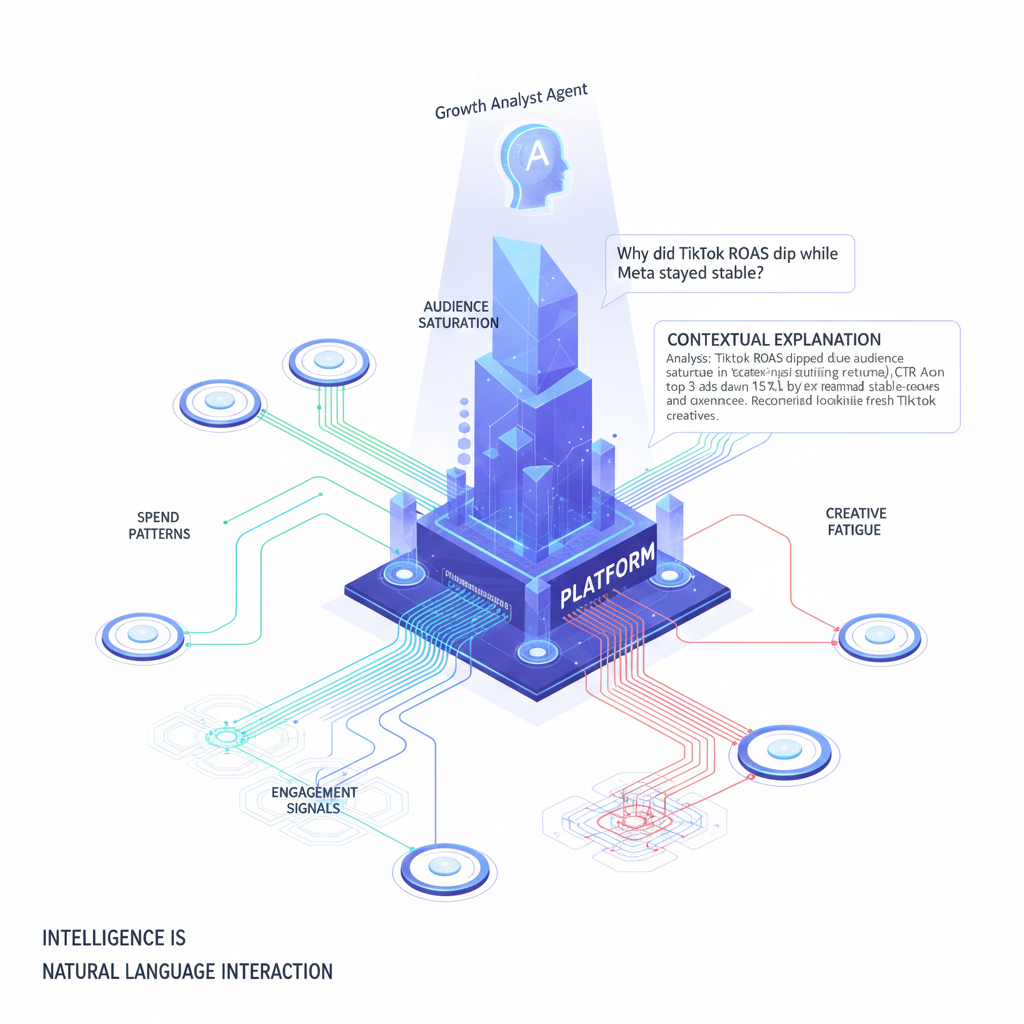
Beyond diagnostics, it enables proactive strategy. The agent simulates scenarios, evaluates trade-offs, and monitors performance continuously, flagging inefficiencies before revenue is impacted. This way, your strategy will be in a loop of constant refinement.
As eCommerce operations scale, friction doesn’t usually come from strategy; it comes from execution. Manual data checks, inconsistent inputs, and operational edge cases quietly drain time and introduce risk.
In 2026, AI Agents take over these high-volume workflows by embedding automation directly into the operational workflows. The goal is both speed and reliability at scale.
At scale, data quality becomes a growth constraint. The Data Integrity Agent exists to ensure that every metric, signal, and event entering your eCommerce stack is accurate, consistent, and usable before it reaches analytics, automation, or AI decision layers.
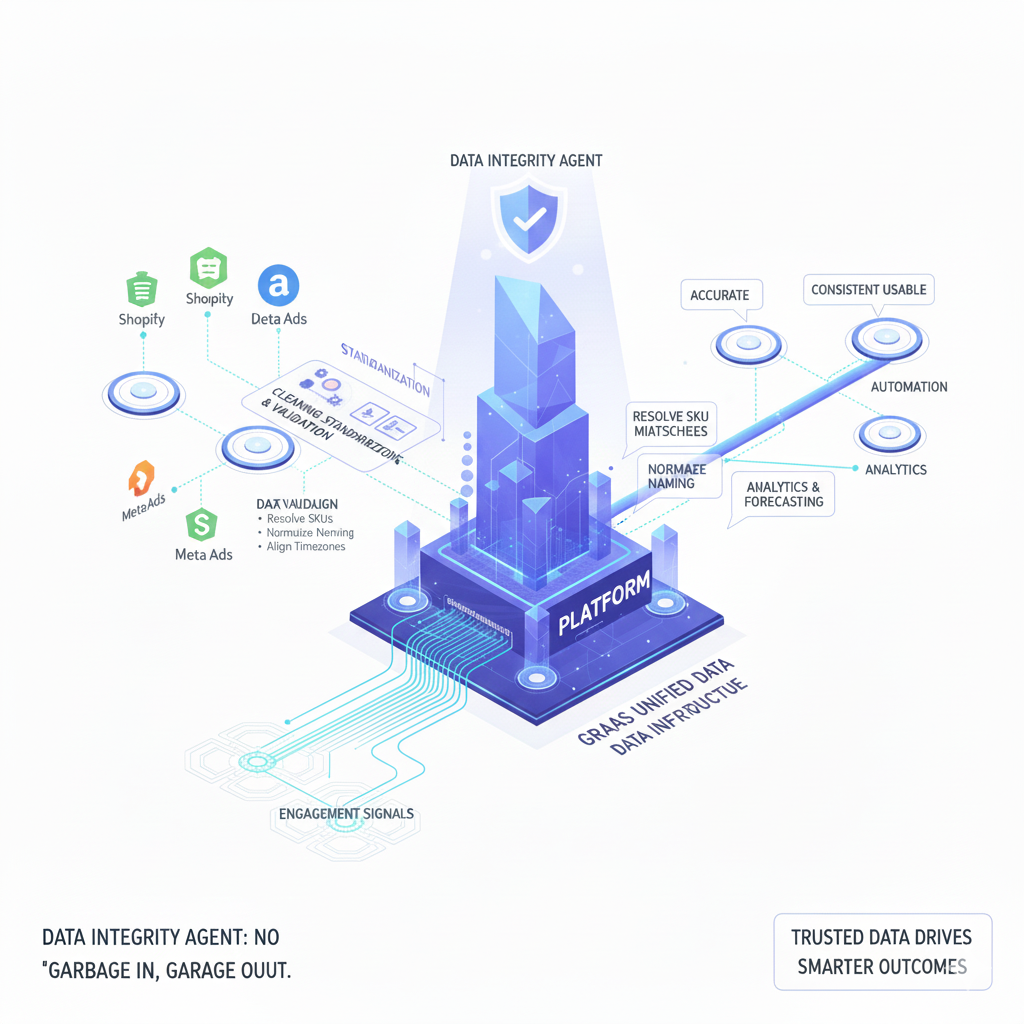
This agent continuously extracts data from storefronts, marketplaces, ad platforms, and operational tools, then cleans, standardizes, and validates it in real time. It resolves SKU mismatches, normalizes naming conventions, aligns time zones, validates pricing and quantity logic, and flags anomalies the moment they appear. Instead of periodic audits or manual fixes, data integrity becomes an always-on control system.
Platforms like Graas play a critical role in enabling this layer. Graas acts as the unified data backbone, pulling data from all your sales and marketing platforms into a single, structured view. The Data Integrity Agent sits on top of this foundation, using Graas’ centralized pipelines to enforce data hygiene, consistency, and reliability across channels.
The result is simple but powerful: no “garbage in, garbage out.” Marketing attribution becomes more accurate, forecasting models more dependable, and downstream AI agents dramatically more effective. By combining Graas’ unified data infrastructure with an autonomous Data Integrity Agent, teams stop questioning their numbers and start trusting them, by default.
For B2B and wholesale teams, order intake is one of the most manual and error-prone workflows. Orders arrive as emails, PDFs, handwritten notes, WhatsApp images, or spreadsheets, each requiring human interpretation and re-entry.
The B2B Order Agent eliminates this bottleneck. It ingests unstructured inputs, understands context using computer vision and language models, and converts them into clean, validated purchase orders automatically. SKUs are mapped, quantities normalized, pricing verified, and exceptions flagged for review.
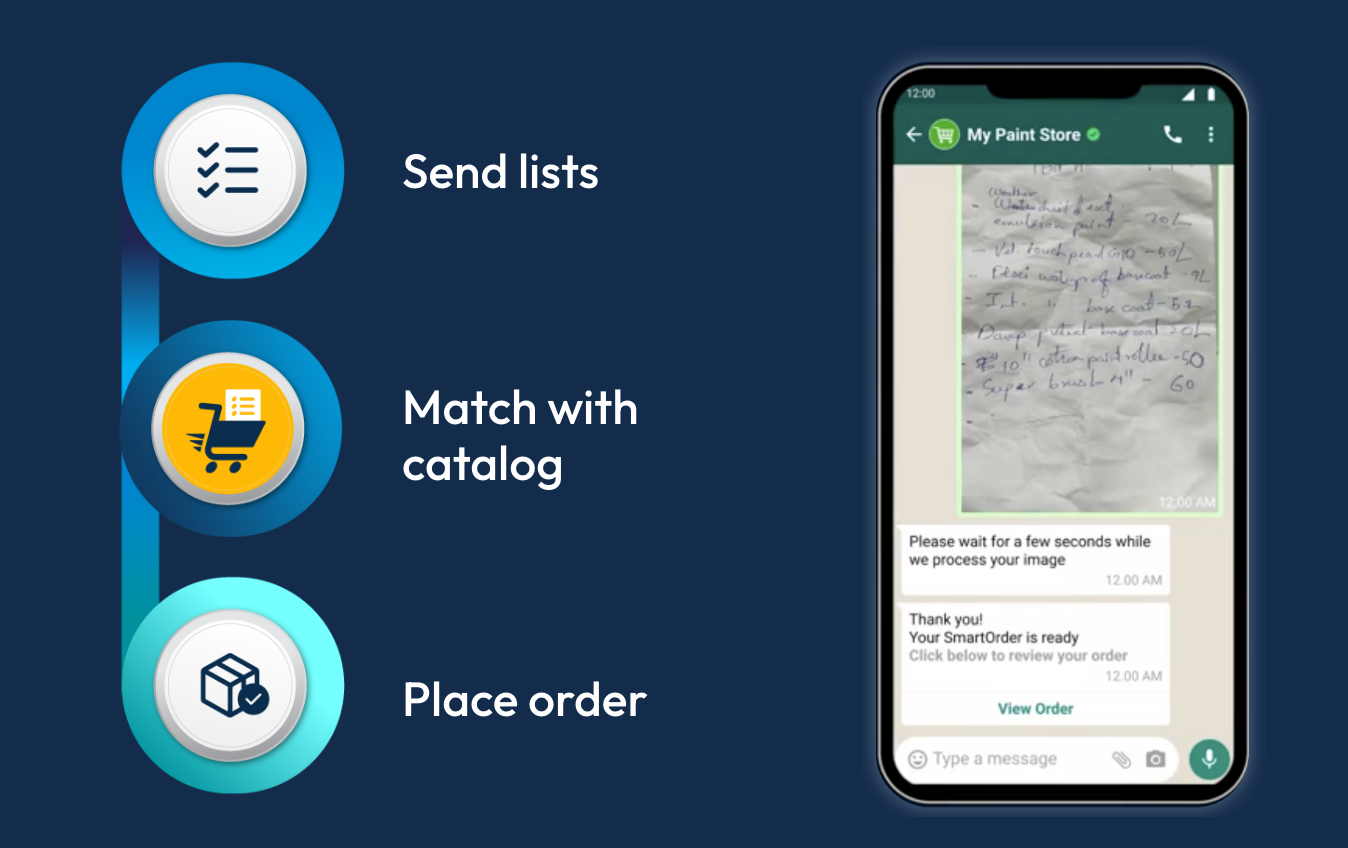
The impact is immediate: sales teams move faster, order errors drop, and fulfillment cycles shorten. More importantly, revenue is no longer constrained by manual capacity. Teams spend less time typing and correcting, and more time selling and expanding accounts.
In 2026, Shoppers expect instant answers, contextual guidance, and brand-consistent interactions across every touchpoint.
When those expectations aren’t met, drop-offs are immediate. AI-driven customer interaction closes this gap by embedding intelligence directly into the buying journey.
The Brand Voice Agent is an LLM-powered live chat agent designed to do more than resolve tickets. It understands your product catalog, pricing logic, policies, and historical customer context, allowing it to respond with precision.
Whether a shopper asks about product fit, compatibility, delivery timelines, or returns, the agent delivers clear, accurate answers in seconds.

Crucially, it operates within a defined brand voice and guardrails. Responses feel consistent with your tone, values, and positioning, building trust rather than sounding automated. Beyond support, the agent actively assists conversion by guiding undecided shoppers, recommending relevant products, and addressing objections at the moment of intent.
For businesses, the impact compounds. Cart abandonment drops as friction is removed in real time. Support teams offload repetitive queries and focus on complex cases. Customer lifetime value increases as every interaction becomes faster, smarter, and more personalized.
In an agentic stack, the Brand Voice Agent turns conversations into a scalable, always-on sales and retention channel, without sacrificing quality or control.
By 2026, winning in eCommerce won’t be about who has the most tools, it will be about who has the smartest operational backbone. AI agents are no longer experimental add-ons; they are becoming core members of the eCom team, delivering autonomous assistance across the entire value chain.
The five foundational agents shaping the modern eCommerce stack include:
Together, these agents represent a structural shift. Competitive advantage will come from agentic infrastructure that moves seamlessly from insight to execution, without waiting on manual intervention. Human teams won’t disappear; they’ll evolve. Strategy, creativity, and oversight become the focus, while agents handle analysis, optimization, and scale.
The next step is practical. Audit where your team loses the most time today - data cleanup, analysis delays, operational bottlenecks, or customer friction. That’s where your first AI agent should go to work.
The Retail AI Index 2026: How 100 Enterprises Are Adopting AI
Read more
WhatsApp Chatbots vs AI Sales Agents: Which Drives Higher Conversions for eCommerce Brands?
Read more
How brands use WhatsApp for eCommerce in SEA: The role of AI agents in driving conversions
Read more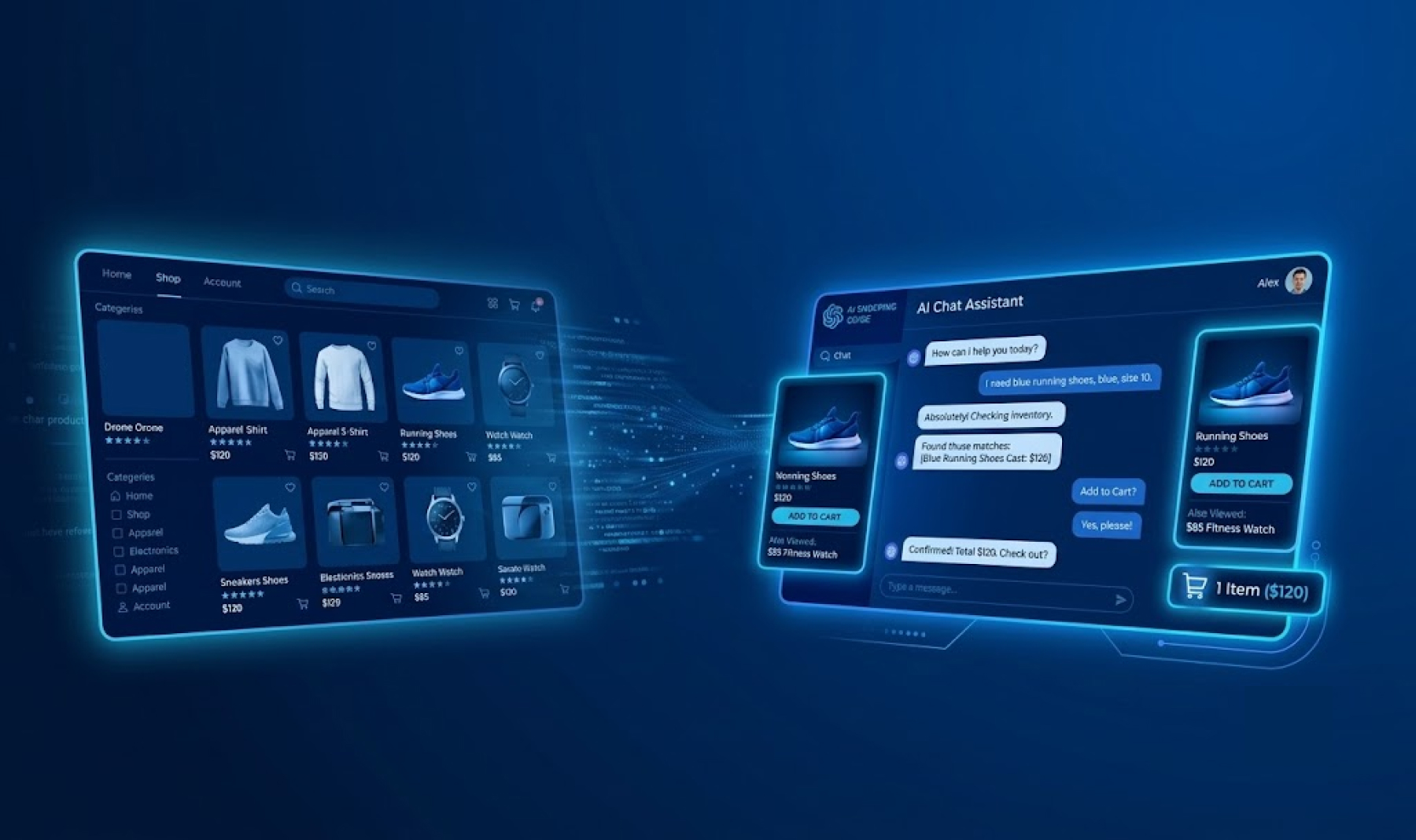
From Browsing to Chat: Why Conversations Are Driving eCommerce
Read more
The ROI of Centralizing Marketplace Operations with Execute
Read moreeCommerce teams aren’t short on data. They’re drowning in it. Customer behavior, ad performance, inventory signals, support tickets - everything streams in constantly.
Yet most teams still operate in silos, spending more time pulling reports, cleaning spreadsheets, and reconciling dashboards than actually making decisions. Even with modern BI tools, value extraction is manual.
Someone still has to ask the right question, interpret the insight, and decide what to do next. In a fast-moving market, that lag adds up.
This is where dashboard fatigue sets in. Teams bounce between Shopify, Google Ads, Klaviyo, Meta, and analytics tools just to form a partial picture. Insights arrive late. Opportunities slip by. And while AI assistants exist, they’re mostly reactive, waiting for prompts instead of driving action.
In 2026, that model breaks. Agentic infrastructure flips the workflow. Autonomous AI agents don’t just analyze data, they act on it. They optimize campaigns, test ideas, surface insights unprompted, and fix inefficiencies continuously.
Your next eCom dream team won’t just be human. It’ll be a coordinated network of AI agents working 24/7, moving faster, personalizing deeper, and scaling smarter than ever before.
Let’s dive right in and discuss how AI agents will assist your eCommerce strategy.
Today’s eCommerce teams sit at an uncomfortable intersection: unprecedented data access and shrinking time to act.
Every platform generates signals (traffic shifts, spend fluctuations, inventory pressure, customer behavior) but interpreting those signals still relies on manual checks and delayed reviews.
In 2026, eCommerce AI Agents fundamentally change this dynamic. Instead of waiting for teams to query dashboards, agents continuously synthesize real-time inputs, detect anomalies as they emerge, and recommend corrective actions before performance drifts.
This is the shift from passive analytics to active intelligence - an always-on layer that turns data into awareness by default.
At the base of this intelligence layer sits the Data Foundation Agent. Its role is not analysis, but coherence. It connects and standardizes data across the entire commerce stack, including:
Rather than exporting reports or stitching spreadsheets, this agent continuously resolves inconsistencies like SKU naming conflicts, attribution mismatches, time-zone lags, and channel-specific metric definitions.
The result is a true single source of commerce truth.
For teams, this means no more arguing over numbers, no more manual reconciliation, and no more blind spots across channels. The agent operates as living infrastructure, constantly syncing, validating, and contextualizing data so every downstream decision is grounded in the same reality.
Once data is unified, intelligence becomes the differentiator. The Growth Analyst Agent functions as an always-on strategic analyst, capable of understanding relationships between metrics.
Instead of static dashboards, teams can interact through natural language. Ask why TikTok ROAS dipped while Meta stayed stable, and the agent traces causality across spend patterns, audience saturation, creative fatigue, and engagement signals. Within seconds, it delivers a clear, contextual explanation.
Beyond diagnostics, it enables proactive strategy. The agent simulates scenarios, evaluates trade-offs, and monitors performance continuously, flagging inefficiencies before revenue is impacted. This way, your strategy will be in a loop of constant refinement.
As eCommerce operations scale, friction doesn’t usually come from strategy; it comes from execution. Manual data checks, inconsistent inputs, and operational edge cases quietly drain time and introduce risk.
In 2026, AI Agents take over these high-volume workflows by embedding automation directly into the operational workflows. The goal is both speed and reliability at scale.
At scale, data quality becomes a growth constraint. The Data Integrity Agent exists to ensure that every metric, signal, and event entering your eCommerce stack is accurate, consistent, and usable before it reaches analytics, automation, or AI decision layers.
This agent continuously extracts data from storefronts, marketplaces, ad platforms, and operational tools, then cleans, standardizes, and validates it in real time. It resolves SKU mismatches, normalizes naming conventions, aligns time zones, validates pricing and quantity logic, and flags anomalies the moment they appear. Instead of periodic audits or manual fixes, data integrity becomes an always-on control system.
Platforms like Graas play a critical role in enabling this layer. Graas acts as the unified data backbone, pulling data from all your sales and marketing platforms into a single, structured view. The Data Integrity Agent sits on top of this foundation, using Graas’ centralized pipelines to enforce data hygiene, consistency, and reliability across channels.
The result is simple but powerful: no “garbage in, garbage out.” Marketing attribution becomes more accurate, forecasting models more dependable, and downstream AI agents dramatically more effective. By combining Graas’ unified data infrastructure with an autonomous Data Integrity Agent, teams stop questioning their numbers and start trusting them, by default.
For B2B and wholesale teams, order intake is one of the most manual and error-prone workflows. Orders arrive as emails, PDFs, handwritten notes, WhatsApp images, or spreadsheets, each requiring human interpretation and re-entry.
The B2B Order Agent eliminates this bottleneck. It ingests unstructured inputs, understands context using computer vision and language models, and converts them into clean, validated purchase orders automatically. SKUs are mapped, quantities normalized, pricing verified, and exceptions flagged for review.
The impact is immediate: sales teams move faster, order errors drop, and fulfillment cycles shorten. More importantly, revenue is no longer constrained by manual capacity. Teams spend less time typing and correcting, and more time selling and expanding accounts.
In 2026, Shoppers expect instant answers, contextual guidance, and brand-consistent interactions across every touchpoint.
When those expectations aren’t met, drop-offs are immediate. AI-driven customer interaction closes this gap by embedding intelligence directly into the buying journey.
The Brand Voice Agent is an LLM-powered live chat agent designed to do more than resolve tickets. It understands your product catalog, pricing logic, policies, and historical customer context, allowing it to respond with precision.
Whether a shopper asks about product fit, compatibility, delivery timelines, or returns, the agent delivers clear, accurate answers in seconds.
Crucially, it operates within a defined brand voice and guardrails. Responses feel consistent with your tone, values, and positioning, building trust rather than sounding automated. Beyond support, the agent actively assists conversion by guiding undecided shoppers, recommending relevant products, and addressing objections at the moment of intent.
For businesses, the impact compounds. Cart abandonment drops as friction is removed in real time. Support teams offload repetitive queries and focus on complex cases. Customer lifetime value increases as every interaction becomes faster, smarter, and more personalized.
In an agentic stack, the Brand Voice Agent turns conversations into a scalable, always-on sales and retention channel, without sacrificing quality or control.
By 2026, winning in eCommerce won’t be about who has the most tools, it will be about who has the smartest operational backbone. AI agents are no longer experimental add-ons; they are becoming core members of the eCom team, delivering autonomous assistance across the entire value chain.
The five foundational agents shaping the modern eCommerce stack include:
Together, these agents represent a structural shift. Competitive advantage will come from agentic infrastructure that moves seamlessly from insight to execution, without waiting on manual intervention. Human teams won’t disappear; they’ll evolve. Strategy, creativity, and oversight become the focus, while agents handle analysis, optimization, and scale.
The next step is practical. Audit where your team loses the most time today - data cleanup, analysis delays, operational bottlenecks, or customer friction. That’s where your first AI agent should go to work.
© 2026 Graas AI
Offices: Singapore | India | Indonesia | Australia | Malaysia | Philippines | Thailand | UAE | Vietnam