

What if your best revenue days weren’t during a sale at all? No Big Billion Days. No Prime Day spikes. No flash discounts are doing the heavy lifting.
Most eCommerce teams are conditioned to believe that growth is unlocked during mega-sale events. This bias is understandable. Sales create visible spikes, internal excitement, and short-term wins that look great on dashboards. But they also hide a dangerous truth: brands that depend on sale days rarely control their revenue.
Top-performing eCommerce brands think differently. Their real advantage shows up on ordinary days - the non-promotional Tuesdays, the full-price weekends, the months with no banner events at all.
These brands don’t chase spikes; they compound gains. They win through better visibility, tighter execution, and smarter decisions across Amazon, Flipkart, Myntra, and D2C, every single day.
The common thread behind this consistency is data. Not just reports, but connected, real-time insights across channels that inform pricing, ads, inventory, and customer experience. This is how leading brands build scalable growth, without betting everything on the next mega sale.
Let’s find out more about how they do it!
Here are some of the challenges that brands face that increase the difference between the order peaks of promotional and non-promotional days:
On non-promotional days, shopper intent naturally drops. Customers browse, compare, and postpone purchases instead of converting immediately. However, competition stays aggressive. Brands continue bidding on the same high-intent keywords, driving up CPCs while conversion rates soften.
In result, it gives thinner margins and higher pressure to justify every rupee spent. Without sale-driven urgency, even strong products need sharper execution to convert.
Ad performance becomes far more volatile outside sales periods. CPCs fluctuate daily, impression share shifts quickly, and ROAS becomes harder to maintain. What worked during a sale often underperforms during normal days. Many teams react by increasing budgets or tweaking bids in isolation, which leads to short-term fixes rather than sustainable gains. Non-promotional periods demand tighter control over keywords, creatives, and spend efficiency, because paid growth is no longer being propped up by platform momentum.
The biggest challenge is visibility. Performance data lives across multiple dashboards - marketplaces, ad platforms, analytics tools, and D2C stores. Without a unified view, it’s difficult to understand what’s actually driving results. A dip in Amazon sales might be linked to rising CPCs, inventory gaps, or demand shifting to D2C, but teams rarely see this in one place. Fragmented data makes non-sale days harder to optimize and slows down decision-making when speed matters most.
Top-performing eCommerce brands don’t treat non-promotional days as a waiting period between sales. Their advantage comes from doing the fundamentals better - consistently, across platforms, and backed by data rather than instinct.
On normal days, discovery is driven by relevance. You can run as much discounts as you want to run, but if the efforts are not relevant to the audience, it’s not going to work.
Top brands invest continuously in optimizing marketplace listing quality, optimized titles and keywords aligned with how customers actually search, complete and accurate product attributes, high-quality images, and regularly refreshed content. They actively manage reviews, respond to feedback, and fix experience gaps that hurt conversion.
This ongoing optimization ensures their products rank and convert even without price-led demand. Over time, stronger listings compound into better organic visibility, lower reliance on ads, and more predictable sales velocity across Amazon, Flipkart, Myntra, and D2C.
One of the biggest differences is SKU discipline. High-growth brands know exactly which products drive the majority of revenue and profit. Instead of pushing the entire catalog equally, they prioritize hero SKUs, those with strong demand, healthy margins, and reliable fulfillment. Pricing is optimized frequently, poor performers are deprioritized, and unnecessary SKU clutter is reduced to simplify operations and marketing focus.
This is where platforms like Graas play a critical role. By consolidating product performance data across marketplaces and D2C, Graas helps teams identify true hero SKUs, track price sensitivity, monitor contribution margins, and spot early signs of decline. Decisions around scaling, pausing, or fixing SKUs become data-backed, not reactive. The result is cleaner catalogs, stronger unit economics, and faster growth on non-sale days.
Top brands don’t switch marketing “on” only during events. They run always-on campaigns designed for efficiency, and SKU-level profitability, not vanity metrics. This way, high-margin products get more visibility, while low-return campaigns are trimmed quickly.
Retargeting plays a bigger role here, re-engaging high-intent users who browsed or added to cart but didn’t convert. Creative refreshes happen regularly to avoid fatigue, and bids are adjusted based on real-time performance rather than fixed rules. Because these brands understand what actually converts outside sales, their marketing spend stays stable, controlled, and scalable throughout the year.
Operational gaps hurt more on non-promotional days because there’s no demand surge to cover mistakes. Top brands obsess over basics: in-stock availability, accurate eCommerce inventory forecasting, fast and reliable delivery, and low return rates. They monitor fulfillment metrics closely, fix listing-to-warehouse mismatches, and act early on stockout risks.
Returns are treated as a feedback loop, not a cost line item. Issues around sizing, packaging, or product quality are identified and resolved quickly. Consistent operational performance protects rankings, improves customer trust, and ensures that marketing and pricing efforts actually convert into revenue.
Finally, top brands invest heavily in retention, especially on D2C. Email, WhatsApp, and app-based CRM flows are designed around replenishment, cross-sell, and lifecycle triggers. Customers who purchase on marketplaces are nudged toward brand-owned channels through packaging inserts, post-purchase engagement, and loyalty benefits.
Repeat purchases smooth out revenue volatility and reduce dependency on paid acquisition. Loyalty programs, personalized recommendations, and post-purchase education increase lifetime value and make growth more predictable.
Over time, this retention engine becomes the biggest differentiator, allowing brands to grow steadily, even when no sales are running. That’s what separates top eCommerce brands from the rest.
Here’s the uncomfortable truth: most eCommerce brands don’t lose revenue because of bad strategy; they lose it because they’re slow to see what’s going wrong.
Fragmented data is the root cause. When performance lives across separate dashboards for ads, marketplaces, inventory, and D2C, decisions lag reality. By the time a dip in conversions, rising CPCs, or an impending stockout becomes obvious, revenue has already leaked.
When there’s no surge in demand to hide inefficiencies, small issues like pricing drift, ad waste, declining reviews, and delivery delays compound quietly. Teams end up reacting in hindsight instead of acting in time. Optimization becomes manual, tactical, and disconnected from the bigger picture.
Top brands grow differently because they operate with connected insights, not isolated metrics. They see how ad spend affects inventory velocity, how pricing changes impact conversion across platforms, and how D2C performance shifts marketplace demand.
This clarity enables faster, more confident decisions - what to scale, what to fix, and what to pause - every single day.
Data, in this context, isn’t about more reports. It’s about alignment. When teams share a single source of truth, execution improves, waste drops, and growth becomes steady instead of event-driven. That’s what powers everyday eCommerce growth.
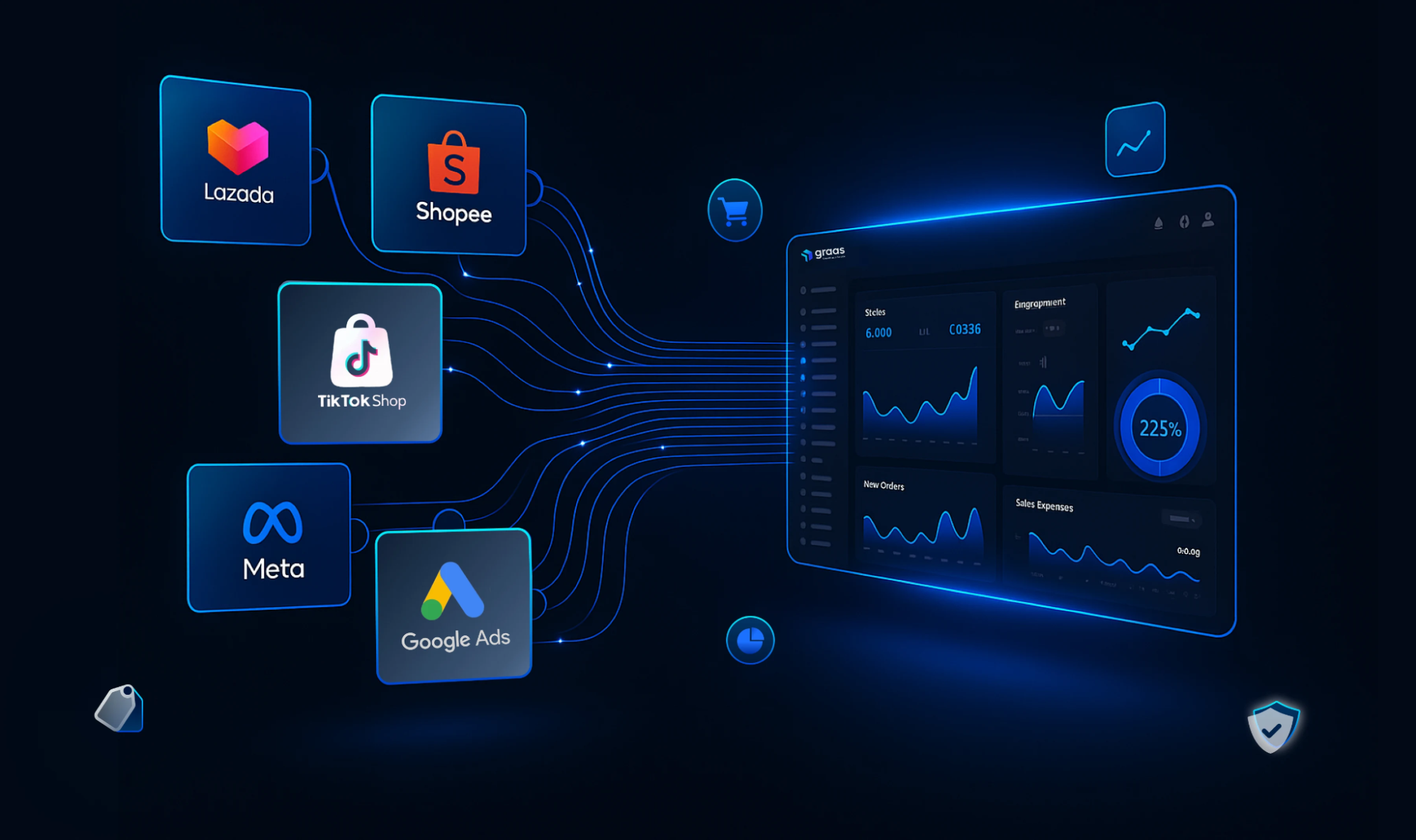
Consistency starts with visibility. A unified eCommerce data platform brings sales performance, ad metrics, SKU-level data, pricing, and inventory signals into a single dashboard.
Instead of jumping between Amazon Seller Central, Flipkart Ads, Myntra panels, and D2C analytics, teams see how everything connects. This eliminates blind spots, like scaling ads on a SKU that’s about to go out of stock or discounting products that already convert well at full price.
Top brands don’t need more spreadsheets. They already have a lot of those. What they seek is clarity in the insights. A unified platform cuts through noise and highlights what actually matters.
Sudden drops in conversion, rising CPCs, declining impression share, or inventory risks surface early. This allows teams to act before performance slips. Faster insight leads to faster execution, which is critical on non-promotional days when small inefficiencies directly impact revenue.
When data is connected, patterns become obvious. Brands can instantly identify hero SKUs, profitable campaigns, and high-performing channels, and just as importantly, spot underperforming products, wasted ad spend, and operational bottlenecks. This level of clarity makes optimization continuous and decisions move from guesswork to evidence-backed actions that improve everyday performance.
The real value of a unified platform is action. Instead of passively showing metrics, it points teams toward next steps - what to scale, what to fix, and what to pause. Pricing adjustments, budget reallocations, inventory planning, and catalog cleanups become easier to execute because insights are contextual. Teams spend less time diagnosing problems and more time improving outcomes.
With connected insights, brands stop depending on spikes from mega-sale events. They balance growth across Amazon, Flipkart, Myntra, and D2C, ensuring no single channel carries all the pressure. Performance becomes predictable, margins improve, and revenue stays stable throughout the year. Unified data turns everyday execution into a competitive advantage, allowing brands to grow steadily, with or without discounts.
Mega-sale events create attention and short-term spikes, but they don’t create durable growth. Stability comes from performing well on the hundreds of normal days in between. That’s where connected data makes the difference. When sales, ads, SKUs, pricing, and inventory are viewed together, brands stop reacting late and start executing with confidence.
With a unified eCommerce data platform like Graas’ Turbo, teams gain the clarity needed to scale what’s working, fix issues early, and protect margins across Amazon, Flipkart, Myntra, and D2C. Growth becomes consistent, predictable, and far less dependent on discounts.
If you’re ready to move beyond event-led revenue and build everyday performance, book a demo with Graas today!

WhatsApp Chatbots vs AI Sales Agents: Which Drives Higher Conversions for eCommerce Brands?
Read more
How brands use WhatsApp for eCommerce in SEA: The role of AI agents in driving conversions
Read more
From Browsing to Chat: Why Conversations Are Driving eCommerce
Read more
The ROI of Centralizing Marketplace Operations with Execute
Read more
How Enterprise Brands Manage Inventory Across Shopee, Lazada, and TikTok Shop
Read moreWhat if your best revenue days weren’t during a sale at all? No Big Billion Days. No Prime Day spikes. No flash discounts are doing the heavy lifting.
Most eCommerce teams are conditioned to believe that growth is unlocked during mega-sale events. This bias is understandable. Sales create visible spikes, internal excitement, and short-term wins that look great on dashboards. But they also hide a dangerous truth: brands that depend on sale days rarely control their revenue.
Top-performing eCommerce brands think differently. Their real advantage shows up on ordinary days - the non-promotional Tuesdays, the full-price weekends, the months with no banner events at all.
These brands don’t chase spikes; they compound gains. They win through better visibility, tighter execution, and smarter decisions across Amazon, Flipkart, Myntra, and D2C, every single day.
The common thread behind this consistency is data. Not just reports, but connected, real-time insights across channels that inform pricing, ads, inventory, and customer experience. This is how leading brands build scalable growth, without betting everything on the next mega sale.
Let’s find out more about how they do it!
Here are some of the challenges that brands face that increase the difference between the order peaks of promotional and non-promotional days:
On non-promotional days, shopper intent naturally drops. Customers browse, compare, and postpone purchases instead of converting immediately. However, competition stays aggressive. Brands continue bidding on the same high-intent keywords, driving up CPCs while conversion rates soften.
In result, it gives thinner margins and higher pressure to justify every rupee spent. Without sale-driven urgency, even strong products need sharper execution to convert.
Ad performance becomes far more volatile outside sales periods. CPCs fluctuate daily, impression share shifts quickly, and ROAS becomes harder to maintain. What worked during a sale often underperforms during normal days. Many teams react by increasing budgets or tweaking bids in isolation, which leads to short-term fixes rather than sustainable gains. Non-promotional periods demand tighter control over keywords, creatives, and spend efficiency, because paid growth is no longer being propped up by platform momentum.
The biggest challenge is visibility. Performance data lives across multiple dashboards - marketplaces, ad platforms, analytics tools, and D2C stores. Without a unified view, it’s difficult to understand what’s actually driving results. A dip in Amazon sales might be linked to rising CPCs, inventory gaps, or demand shifting to D2C, but teams rarely see this in one place. Fragmented data makes non-sale days harder to optimize and slows down decision-making when speed matters most.
Top-performing eCommerce brands don’t treat non-promotional days as a waiting period between sales. Their advantage comes from doing the fundamentals better - consistently, across platforms, and backed by data rather than instinct.
On normal days, discovery is driven by relevance. You can run as much discounts as you want to run, but if the efforts are not relevant to the audience, it’s not going to work.
Top brands invest continuously in optimizing marketplace listing quality, optimized titles and keywords aligned with how customers actually search, complete and accurate product attributes, high-quality images, and regularly refreshed content. They actively manage reviews, respond to feedback, and fix experience gaps that hurt conversion.
This ongoing optimization ensures their products rank and convert even without price-led demand. Over time, stronger listings compound into better organic visibility, lower reliance on ads, and more predictable sales velocity across Amazon, Flipkart, Myntra, and D2C.
One of the biggest differences is SKU discipline. High-growth brands know exactly which products drive the majority of revenue and profit. Instead of pushing the entire catalog equally, they prioritize hero SKUs, those with strong demand, healthy margins, and reliable fulfillment. Pricing is optimized frequently, poor performers are deprioritized, and unnecessary SKU clutter is reduced to simplify operations and marketing focus.
This is where platforms like Graas play a critical role. By consolidating product performance data across marketplaces and D2C, Graas helps teams identify true hero SKUs, track price sensitivity, monitor contribution margins, and spot early signs of decline. Decisions around scaling, pausing, or fixing SKUs become data-backed, not reactive. The result is cleaner catalogs, stronger unit economics, and faster growth on non-sale days.
Top brands don’t switch marketing “on” only during events. They run always-on campaigns designed for efficiency, and SKU-level profitability, not vanity metrics. This way, high-margin products get more visibility, while low-return campaigns are trimmed quickly.
Retargeting plays a bigger role here, re-engaging high-intent users who browsed or added to cart but didn’t convert. Creative refreshes happen regularly to avoid fatigue, and bids are adjusted based on real-time performance rather than fixed rules. Because these brands understand what actually converts outside sales, their marketing spend stays stable, controlled, and scalable throughout the year.
Operational gaps hurt more on non-promotional days because there’s no demand surge to cover mistakes. Top brands obsess over basics: in-stock availability, accurate eCommerce inventory forecasting, fast and reliable delivery, and low return rates. They monitor fulfillment metrics closely, fix listing-to-warehouse mismatches, and act early on stockout risks.
Returns are treated as a feedback loop, not a cost line item. Issues around sizing, packaging, or product quality are identified and resolved quickly. Consistent operational performance protects rankings, improves customer trust, and ensures that marketing and pricing efforts actually convert into revenue.
Finally, top brands invest heavily in retention, especially on D2C. Email, WhatsApp, and app-based CRM flows are designed around replenishment, cross-sell, and lifecycle triggers. Customers who purchase on marketplaces are nudged toward brand-owned channels through packaging inserts, post-purchase engagement, and loyalty benefits.
Repeat purchases smooth out revenue volatility and reduce dependency on paid acquisition. Loyalty programs, personalized recommendations, and post-purchase education increase lifetime value and make growth more predictable.
Over time, this retention engine becomes the biggest differentiator, allowing brands to grow steadily, even when no sales are running. That’s what separates top eCommerce brands from the rest.
Here’s the uncomfortable truth: most eCommerce brands don’t lose revenue because of bad strategy; they lose it because they’re slow to see what’s going wrong.
Fragmented data is the root cause. When performance lives across separate dashboards for ads, marketplaces, inventory, and D2C, decisions lag reality. By the time a dip in conversions, rising CPCs, or an impending stockout becomes obvious, revenue has already leaked.
When there’s no surge in demand to hide inefficiencies, small issues like pricing drift, ad waste, declining reviews, and delivery delays compound quietly. Teams end up reacting in hindsight instead of acting in time. Optimization becomes manual, tactical, and disconnected from the bigger picture.
Top brands grow differently because they operate with connected insights, not isolated metrics. They see how ad spend affects inventory velocity, how pricing changes impact conversion across platforms, and how D2C performance shifts marketplace demand.
This clarity enables faster, more confident decisions - what to scale, what to fix, and what to pause - every single day.
Data, in this context, isn’t about more reports. It’s about alignment. When teams share a single source of truth, execution improves, waste drops, and growth becomes steady instead of event-driven. That’s what powers everyday eCommerce growth.
Consistency starts with visibility. A unified eCommerce data platform brings sales performance, ad metrics, SKU-level data, pricing, and inventory signals into a single dashboard.
Instead of jumping between Amazon Seller Central, Flipkart Ads, Myntra panels, and D2C analytics, teams see how everything connects. This eliminates blind spots, like scaling ads on a SKU that’s about to go out of stock or discounting products that already convert well at full price.
Top brands don’t need more spreadsheets. They already have a lot of those. What they seek is clarity in the insights. A unified platform cuts through noise and highlights what actually matters.
Sudden drops in conversion, rising CPCs, declining impression share, or inventory risks surface early. This allows teams to act before performance slips. Faster insight leads to faster execution, which is critical on non-promotional days when small inefficiencies directly impact revenue.
When data is connected, patterns become obvious. Brands can instantly identify hero SKUs, profitable campaigns, and high-performing channels, and just as importantly, spot underperforming products, wasted ad spend, and operational bottlenecks. This level of clarity makes optimization continuous and decisions move from guesswork to evidence-backed actions that improve everyday performance.
The real value of a unified platform is action. Instead of passively showing metrics, it points teams toward next steps - what to scale, what to fix, and what to pause. Pricing adjustments, budget reallocations, inventory planning, and catalog cleanups become easier to execute because insights are contextual. Teams spend less time diagnosing problems and more time improving outcomes.
With connected insights, brands stop depending on spikes from mega-sale events. They balance growth across Amazon, Flipkart, Myntra, and D2C, ensuring no single channel carries all the pressure. Performance becomes predictable, margins improve, and revenue stays stable throughout the year. Unified data turns everyday execution into a competitive advantage, allowing brands to grow steadily, with or without discounts.
Mega-sale events create attention and short-term spikes, but they don’t create durable growth. Stability comes from performing well on the hundreds of normal days in between. That’s where connected data makes the difference. When sales, ads, SKUs, pricing, and inventory are viewed together, brands stop reacting late and start executing with confidence.
With a unified eCommerce data platform like Graas’ Turbo, teams gain the clarity needed to scale what’s working, fix issues early, and protect margins across Amazon, Flipkart, Myntra, and D2C. Growth becomes consistent, predictable, and far less dependent on discounts.
If you’re ready to move beyond event-led revenue and build everyday performance, book a demo with Graas today!
© 2026 Graas AI
Offices: Singapore | India | Indonesia | Malaysia | Philippines | Thailand | Vietnam