Graas closes US$17M Series B, acquires Trustana → Read more


Every retail enterprise says they're moving on AI. Almost none can tell you exactly how far they've actually gotten.
We wanted a real answer, so we sat down with 100 enterprise leaders across India and Southeast Asia. CEOs, CIOs, CTOs, CMOs, CSOs, and Heads of Digital Transformation, all running businesses with revenues of US$200M or more. The conversations ran through Q2 2026, spanning industrial and electrical, fashion and lifestyle, FMCG, and pharma and agro.
What we found is a market that's evaluating hard and shipping rarely, chasing voice before it trusts it, and hitting the same wall in every conversation: not a lack of data, but a lack of context.
Here's what 100 conversations told us about where retail AI actually stands.
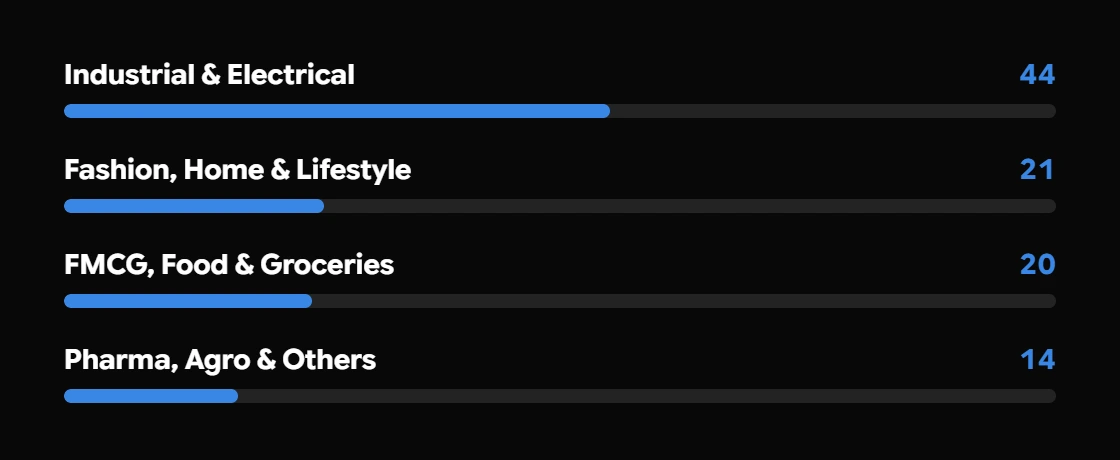
To ground the findings, here's the breakdown of who took part:
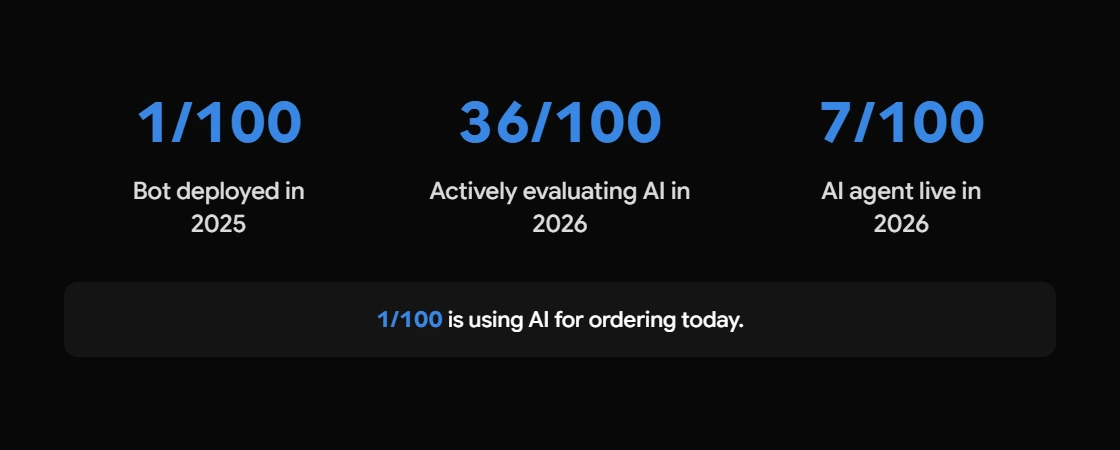
In 2025, just one enterprise in our sample had an AI bot in production. By 2026, that number has grown sevenfold. Seven enterprises now have an AI agent live. Another 36 are actively evaluating AI, which means for every enterprise that's gone live, roughly five more are still deciding.
Only one enterprise in 100 is using AI for ordering today. Support remains the easiest place to start, and the safest. It's where most first deployments happen. Ordering and other revenue-generating use cases are still early, held back less by ambition than by trust.
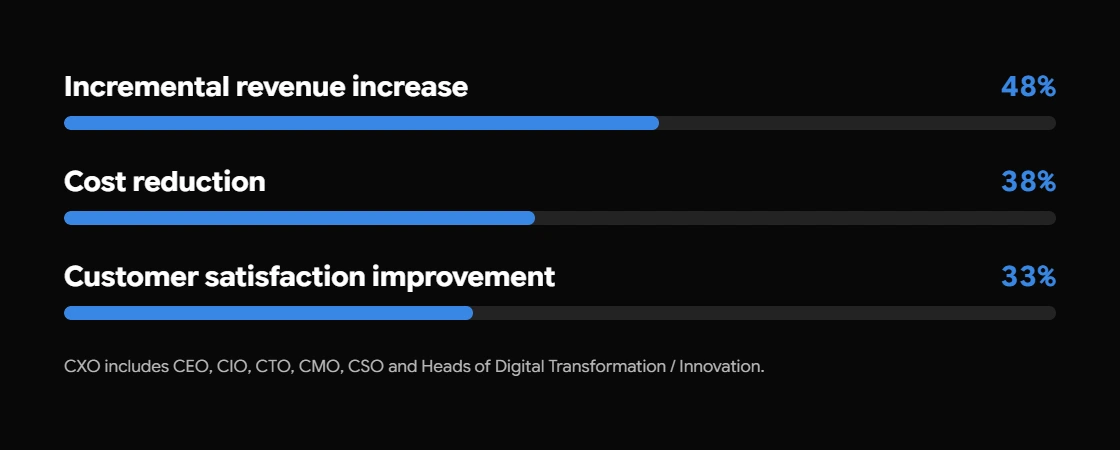
We asked CXOs what they want AI to accomplish. 48% said incremental revenue increase, ahead of cost reduction at 38% and customer satisfaction improvement at 33%. Revenue, not just efficiency, is now the leading reason CXOs are willing to invest.
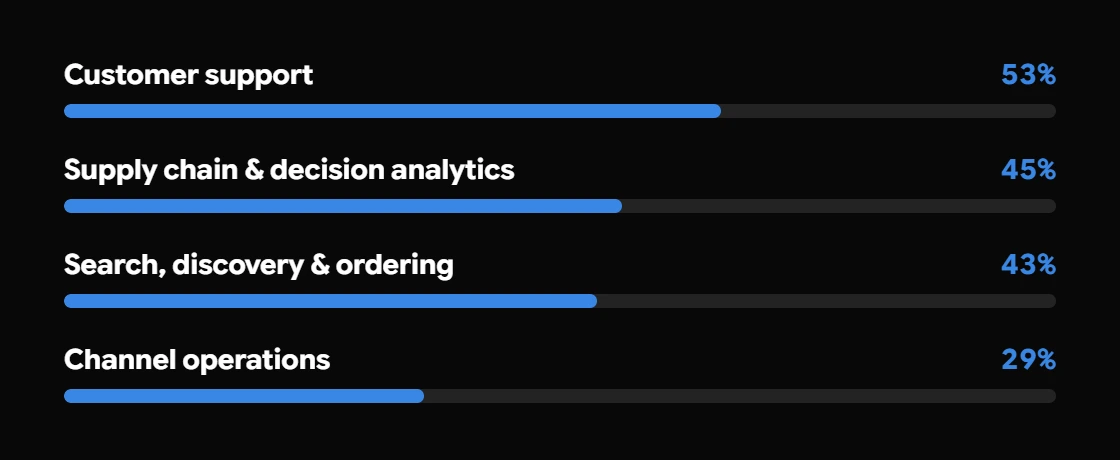
That revenue focus shows up in where enterprises want AI deployed: 53% want it in customer support, 45% in supply chain and decision analytics, 43% in search, discovery and ordering, and 29% in channel operations. Demand has moved well past the support desk, into decisions, customer interactions, and revenue-generating workflows across the business.
Voice came up in almost every conversation we had. 31 out of 100 enterprises are actively evaluating voice-to-voice agents, more than any other format.
Only 4 of those 31 have gone live. The appetite for voice is real, but robust evaluation for agent misbehaviour is still an emerging capability, and most enterprises aren't ready to hand voice a live customer yet.
Four concerns came up again and again, almost word for word:
"I worry about agent hallucination around my product range and warranty."
"The agent does not know my pricing."
"The agent cannot bring a human into the conversation when required."
"The agent is unaware of my inventory in the warehouse."
Every one of those concerns traces back to the same gap: the agent doesn't have the context it needs to act. The answers already exist — spread across ERP, DMS, SFA, dealer apps, CRM, and WMS. But only 3 out of 100 enterprises have a context layer connecting them.
Across all 100 conversations, the constraint was rarely a lack of data. The systems already hold the facts: price, stock, credit, product, customer, and transaction data. What's missing is the layer that connects them so an AI agent can actually reason across them.
At Graas, we call that layer the Commerce Knowledge Graph. It connects enterprise systems and turns scattered pricing, inventory, and customer data into a single source of truth, so decisions stop being guesswork.
The next wave of enterprise AI won't be defined by models alone. It will be defined by the context those models can access. Right now, that's the gap between the 36 enterprises evaluating AI and the seven that have actually gone live.
The Retail AI Index 2026: How 100 Enterprises Are Adopting AI
Read more
WhatsApp Chatbots vs AI Sales Agents: Which Drives Higher Conversions for eCommerce Brands?
Read more
How brands use WhatsApp for eCommerce in SEA: The role of AI agents in driving conversions
Read more
From Browsing to Chat: Why Conversations Are Driving eCommerce
Read more
The ROI of Centralizing Marketplace Operations with Execute
Read moreEvery retail enterprise says they're moving on AI. Almost none can tell you exactly how far they've actually gotten.
We wanted a real answer, so we sat down with 100 enterprise leaders across India and Southeast Asia. CEOs, CIOs, CTOs, CMOs, CSOs, and Heads of Digital Transformation, all running businesses with revenues of US$200M or more. The conversations ran through Q2 2026, spanning industrial and electrical, fashion and lifestyle, FMCG, and pharma and agro.
What we found is a market that's evaluating hard and shipping rarely, chasing voice before it trusts it, and hitting the same wall in every conversation: not a lack of data, but a lack of context.
Here's what 100 conversations told us about where retail AI actually stands.
To ground the findings, here's the breakdown of who took part:
In 2025, just one enterprise in our sample had an AI bot in production. By 2026, that number has grown sevenfold. Seven enterprises now have an AI agent live. Another 36 are actively evaluating AI, which means for every enterprise that's gone live, roughly five more are still deciding.
Only one enterprise in 100 is using AI for ordering today. Support remains the easiest place to start, and the safest. It's where most first deployments happen. Ordering and other revenue-generating use cases are still early, held back less by ambition than by trust.
We asked CXOs what they want AI to accomplish. 48% said incremental revenue increase, ahead of cost reduction at 38% and customer satisfaction improvement at 33%. Revenue, not just efficiency, is now the leading reason CXOs are willing to invest.
That revenue focus shows up in where enterprises want AI deployed: 53% want it in customer support, 45% in supply chain and decision analytics, 43% in search, discovery and ordering, and 29% in channel operations. Demand has moved well past the support desk, into decisions, customer interactions, and revenue-generating workflows across the business.
Voice came up in almost every conversation we had. 31 out of 100 enterprises are actively evaluating voice-to-voice agents, more than any other format.
Only 4 of those 31 have gone live. The appetite for voice is real, but robust evaluation for agent misbehaviour is still an emerging capability, and most enterprises aren't ready to hand voice a live customer yet.
Four concerns came up again and again, almost word for word:
"I worry about agent hallucination around my product range and warranty."
"The agent does not know my pricing."
"The agent cannot bring a human into the conversation when required."
"The agent is unaware of my inventory in the warehouse."
Every one of those concerns traces back to the same gap: the agent doesn't have the context it needs to act. The answers already exist — spread across ERP, DMS, SFA, dealer apps, CRM, and WMS. But only 3 out of 100 enterprises have a context layer connecting them.
Across all 100 conversations, the constraint was rarely a lack of data. The systems already hold the facts: price, stock, credit, product, customer, and transaction data. What's missing is the layer that connects them so an AI agent can actually reason across them.
At Graas, we call that layer the Commerce Knowledge Graph. It connects enterprise systems and turns scattered pricing, inventory, and customer data into a single source of truth, so decisions stop being guesswork.
The next wave of enterprise AI won't be defined by models alone. It will be defined by the context those models can access. Right now, that's the gap between the 36 enterprises evaluating AI and the seven that have actually gone live.
© 2026 Graas AI
Offices: Singapore | India | Indonesia | Australia | Malaysia | Philippines | Thailand | UAE | Vietnam