Graas closes US$17M Series B, acquires Trustana → Read more


Every vendor is suddenly "agentic". Buyers are drowning in pitches.
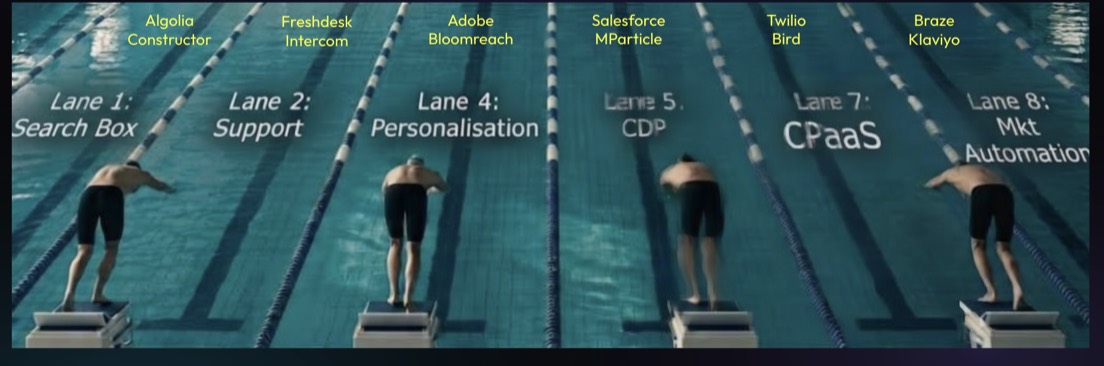
Twelve months ago, technology vendors stayed in their lanes. The search box at the top of your website. The support widget at the bottom right. Email, messaging, calling - each its own specialist. Nobody crossed over.
Twelve months ago, everyone stayed in their lane. Then every lane learned to talk.
Then came agentic commerce, and all hell broke loose. Long story short - everyone now does everything. And buyers are more confused than ever:
Chatbot, or agent? What about hallucinations? Which vendor is actually AI-native - and which just renamed the roadmap? Build in-house, or outsource? Which model - and what happens when a better one ships next quarter? Where does our data go? Does it train someone else's model? And who takes the blame when the agent quotes the wrong price?
Recently, we received two RFI documents. From the same company. One asked for an ordering agent for General Trade. The other came from their Contact Center team - they wanted an agent to handle post-sales enquiries.
We spoke to both teams. The data needed to build both agents was identical: the product catalog, the CRM, the ERP.
One company. Two agent projects. Both agents need the same facts - what you sell, the price, what was ordered, why the buyer is unhappy. If two agents need the same facts, why are they being bought separately?
Because that's how the company is drawn. Take an FMCG brand in India or Indonesia: revenue splits across General Trade (kirana stores in India, warungs in Indonesia), Modern Trade and ecommerce - and General Trade takes the lion's share. Elsewhere the channel names change; the separate teams and systems don't.
Different buyers, different software, different channels - and the same product range underneath, sold to a consumer or to an intermediary.
For 25 years, brands have run each channel separately, with separate teams. Running them separately is no longer required.
Under every channel sit the same three systems - Product Catalog, ERP, CRM - and one shared channel: WhatsApp. These systems (of record) stay.
The model - OpenAI, Gemini, Claude - is the voice: rented, replaceable. The systems are the limbs. The brain is the layer that connects them and it's the only part you must own.
Get that layer right, and the General Trade agent and the support agent don't start from zero. Each still needs its own job description - what it may do, which rules it follows, when it hands over to a person - but both stand on the same foundation and read the same facts. So do the WhatsApp agent and the voice agent.
How do you make an agent your best salesperson? It has to know what this buyer always orders, what scheme he qualifies for today, and how much credit he has left - before it quotes.
Your most empathetic support person? It has to know the complaint was about last week's late delivery - without asking the customer to repeat the story a third time.
An invoice with no mistakes? The price comes from the ERP, the discount from this month's scheme file - the way your best back-office person does it, without the copy-paste.
The right promo? The scheme has dates and eligibility; the agent checks both.
The right truck? Stock and routes sit in the warehouse and transport systems - no promising today what the depot can't load until Thursday.
Notice what every answer has in common. The facts already exist. Context is the layer that lets every agent read them - resolved and current: this buyer, this price, this stock, today.
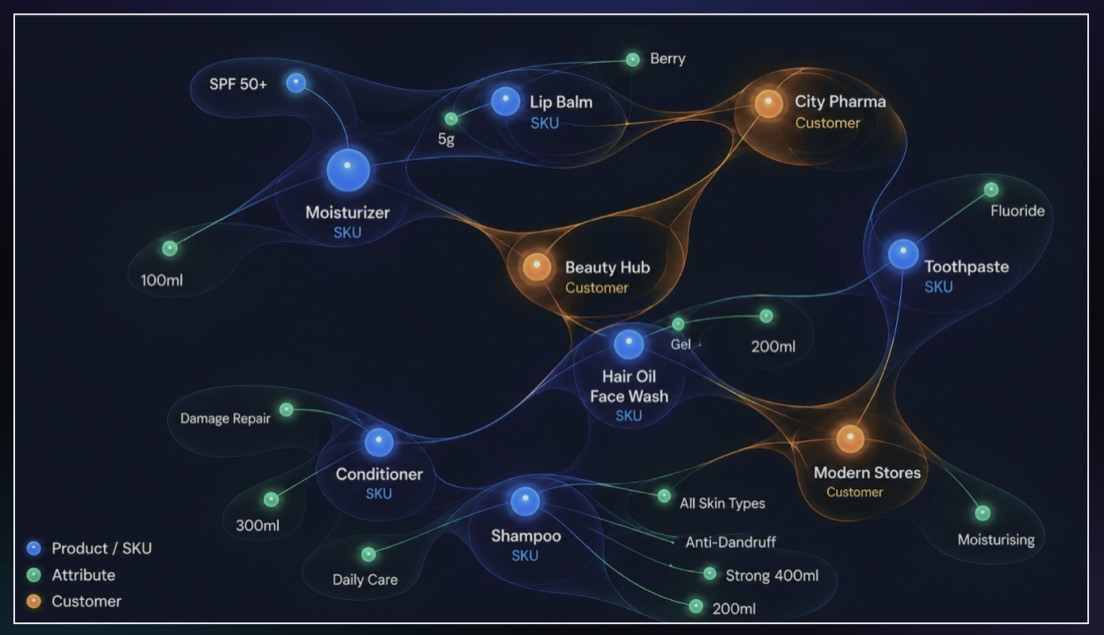
Follow one thread. City Pharma - buys the Lip Balm - Berry, 5g. The customer came from the CRM, the pack size from the Product Catalog, the buying history from the ERP. Three systems, one memory. Now look at the whole map: every product, every pack size, every customer, every claim - connected.
Remember the two agent projects? This map is what both RFIs were missing. The same brain, about to be bought twice. One team will pay for it in the ordering budget, the other in the support budget - and neither agent will ever know what the other learned.
Build the map once. Every agent you ever add gets smarter the day you plug it in. Watch context in action.
From the Index: the enterprises we spoke to run several systems behind these channels.
Is your company buying an agent right now - or two? Tell us which agents you're building, and we'll tell you whether they can share a brain.
Too Much AI Noise: Why Retail Keeps Buying the Same Agent Brain Twice
อ่านบทความ
The Retail AI Index 2026: How 100 Enterprises Are Adopting AI
อ่านบทความ
WhatsApp Chatbots vs AI Sales Agents: อะไรช่วยเพิ่ม Conversion ให้แบรนด์ eCommerce ได้มากกว่า?
อ่านบทความ
แบรนด์ใช้ WhatsApp สำหรับ eCommerce ในเอเชียตะวันออกเฉียงใต้อย่างไร: บทบาทของ AI Agents ในการเพิ่ม Conversion
อ่านบทความ
จากการ Browse สู่การ Chat: ทำไมบทสนทนาจึงกลายเป็นแรงขับเคลื่อนของ eCommerce
อ่านบทความEvery vendor is suddenly "agentic". Buyers are drowning in pitches.
Twelve months ago, technology vendors stayed in their lanes. The search box at the top of your website. The support widget at the bottom right. Email, messaging, calling - each its own specialist. Nobody crossed over.
Twelve months ago, everyone stayed in their lane. Then every lane learned to talk.
Then came agentic commerce, and all hell broke loose. Long story short - everyone now does everything. And buyers are more confused than ever:
Chatbot, or agent? What about hallucinations? Which vendor is actually AI-native - and which just renamed the roadmap? Build in-house, or outsource? Which model - and what happens when a better one ships next quarter? Where does our data go? Does it train someone else's model? And who takes the blame when the agent quotes the wrong price?
Recently, we received two RFI documents. From the same company. One asked for an ordering agent for General Trade. The other came from their Contact Center team - they wanted an agent to handle post-sales enquiries.
We spoke to both teams. The data needed to build both agents was identical: the product catalog, the CRM, the ERP.
One company. Two agent projects. Both agents need the same facts - what you sell, the price, what was ordered, why the buyer is unhappy. If two agents need the same facts, why are they being bought separately?
Because that's how the company is drawn. Take an FMCG brand in India or Indonesia: revenue splits across General Trade (kirana stores in India, warungs in Indonesia), Modern Trade and ecommerce - and General Trade takes the lion's share. Elsewhere the channel names change; the separate teams and systems don't.
Different buyers, different software, different channels - and the same product range underneath, sold to a consumer or to an intermediary.
For 25 years, brands have run each channel separately, with separate teams. Running them separately is no longer required.
Under every channel sit the same three systems - Product Catalog, ERP, CRM - and one shared channel: WhatsApp. These systems (of record) stay.
The model - OpenAI, Gemini, Claude - is the voice: rented, replaceable. The systems are the limbs. The brain is the layer that connects them and it's the only part you must own.
Get that layer right, and the General Trade agent and the support agent don't start from zero. Each still needs its own job description - what it may do, which rules it follows, when it hands over to a person - but both stand on the same foundation and read the same facts. So do the WhatsApp agent and the voice agent.
How do you make an agent your best salesperson? It has to know what this buyer always orders, what scheme he qualifies for today, and how much credit he has left - before it quotes.
Your most empathetic support person? It has to know the complaint was about last week's late delivery - without asking the customer to repeat the story a third time.
An invoice with no mistakes? The price comes from the ERP, the discount from this month's scheme file - the way your best back-office person does it, without the copy-paste.
The right promo? The scheme has dates and eligibility; the agent checks both.
The right truck? Stock and routes sit in the warehouse and transport systems - no promising today what the depot can't load until Thursday.
Notice what every answer has in common. The facts already exist. Context is the layer that lets every agent read them - resolved and current: this buyer, this price, this stock, today.
Follow one thread. City Pharma - buys the Lip Balm - Berry, 5g. The customer came from the CRM, the pack size from the Product Catalog, the buying history from the ERP. Three systems, one memory. Now look at the whole map: every product, every pack size, every customer, every claim - connected.
Remember the two agent projects? This map is what both RFIs were missing. The same brain, about to be bought twice. One team will pay for it in the ordering budget, the other in the support budget - and neither agent will ever know what the other learned.
Build the map once. Every agent you ever add gets smarter the day you plug it in. Watch context in action.
From the Index: the enterprises we spoke to run several systems behind these channels.
Is your company buying an agent right now - or two? Tell us which agents you're building, and we'll tell you whether they can share a brain.
© 2026 Graas AI
Offices: Singapore | India | Indonesia | Australia | Malaysia | Philippines | Thailand | UAE | Vietnam